
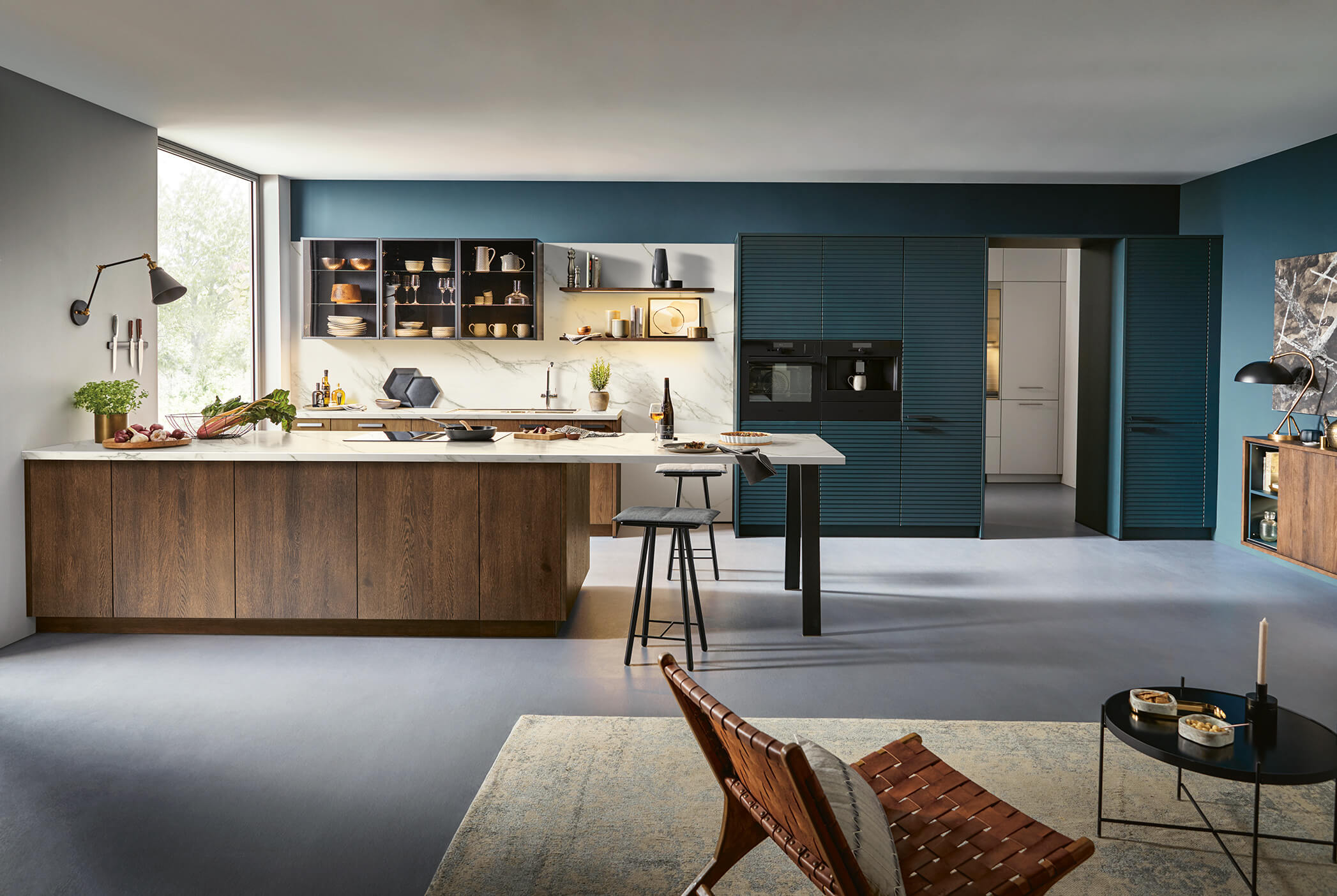
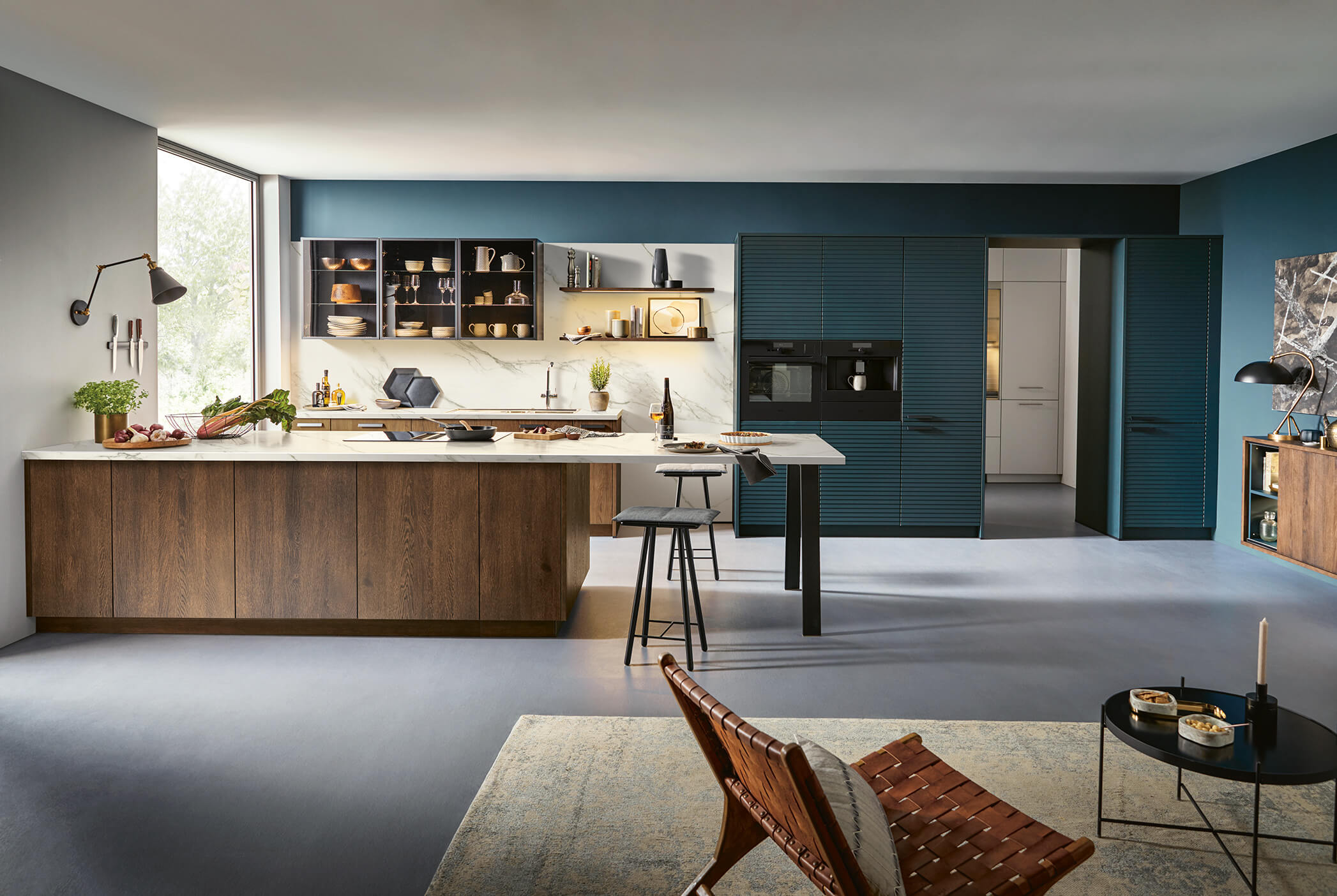
On paper, two kitchens can look almost identical. Same colour, same handleless doors, same island. But open the drawers and the gap between a premium German kitchen and a standard flat-pack becomes obvious in seconds. Here at KitchenSMART in Milton Keynes, we get asked all the time whether the extra spend is worth it. This is the honest answer.
We’ve fitted both over the years, and the difference isn’t marketing. It’s in the carcass, the hinges, the tolerances and how the whole thing feels three years down the line. Let’s break the key differences down properly.
01. What actually makes a premium German kitchen different
Start with the box everything hangs off. A standard carcass is often 16mm board with cam-and-dowel joints. A German-engineered kitchen uses 19mm board, sealed edges and factory-precise dowelling, so it stays square for decades. That extra 3mm sounds tiny. On a run of ten units it’s the difference between doors that line up and doors that drift.
Then there’s the hardware. Schüller kitchens ship with soft-close hinges and full-extension runners as standard, not as an upgrade. You can read more about how these ranges are built in our guide to Schüller finishes.
02. Build quality you can feel every day
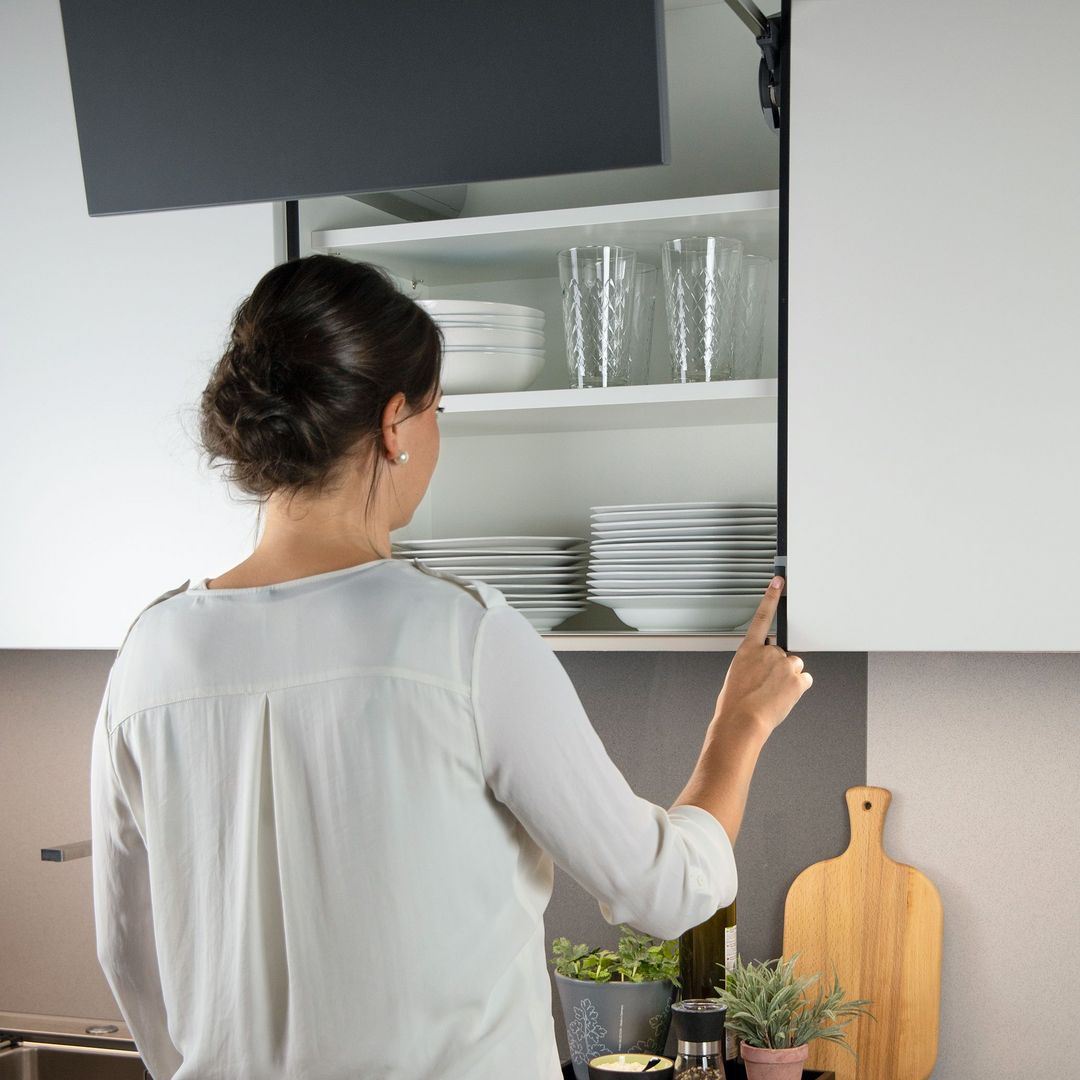
Standard kitchens are built to a price point and a lifespan of maybe eight to ten years. A premium German kitchen is engineered to last 20 plus. Drawers glide instead of stick. Doors close with a whisper. The finishes resist moisture and heat far better, which matters in a room that’s steamy, hot and busy every single day.
See it in the flesh across our completed projects, from a crisp Glasline white and black scheme to a warmer Fino Glasline matt layout.
“People notice the doors first. But it’s the bits you can’t see, the carcass and the runners, that decide whether you still love the kitchen in year fifteen.”
03. Worktops, appliances and the details
Standard packages tend to bundle laminate and entry-level appliances. With a German kitchen you’re pairing precision cabinetry with materials that match it. We fit hard-wearing granite and quartz worktops, plus premium appliances from Neff, Bosch, Siemens, Bora and Quooker. Everything’s specced to work together, from the sinks and taps to the handle options.
04. Cost, value and the long game
Yes, a premium German kitchen costs more upfront. But split the price over 20 years and it often works out more affordable per year than replacing a standard kitchen twice. Our Schüller price guide explains the bands honestly, and every kitchen is quoted after a proper design consultation, never a shelf price. For the full picture, our manufacturer comparison is a solid read.
05. Why buyers in Milton Keynes choose a German kitchen
Whether it’s a Linford Wood renovation or a new build, our clients want cabinetry that holds up. We handle everything from design through project-managed installation. Explore the full ranges, browse Lineo, or visit our Milton Keynes showroom. If you’re weighing options, our supplier comparison and buyer’s guide go deeper. Trade clients can see our developer service too.
Frequently Asked Questions
Is a premium German kitchen worth the extra cost?
For most people, yes. The thicker carcass, better hinges and superior finishes mean it lasts two decades or more. Spread across that lifespan it’s often better value than a standard kitchen you’ll replace far sooner. See our reasons to choose us.
How long does installation take?
Most projects run one to two weeks on site once cabinetry arrives, depending on size and worktop lead times. Our timeline guide covers each stage from survey to snagging.
Can I see one before I buy?
Absolutely. Displays let you open drawers, test hinges and compare finishes side by side. Book a visit to our Linford Wood showroom or arrange a free home design consultation instead.
See the difference for yourself
Free in-home design visit. No pressure, no time limit, no obligation.
Book Your Free Visit →SEO & blogs by signal