

Handles are the first thing you notice on a kitchen, and the first thing that dates it. That’s a big part of why handleless kitchens have become the go-to look for a modern home. Clean lines, nothing to catch a hip on, and a run of doors that reads as one calm surface.
At KitchenSMART we design and fit handleless Schüller kitchens most weeks. Here’s how they actually work, the honest pros and cons, and what to check before you buy. For every option side by side, see our handle options page.
01. How Handleless Kitchens Work
“Handleless” covers three different systems, and it’s worth knowing which one you’re being quoted for.
True handleless uses a recessed rail, or grip ledge profile, running along the cabinet under the worktop and between drawers. You hook your fingers into the channel to open. J-pull doors have a lip shaped into the top edge of the door itself. Push-to-open has no grip at all, you press the front and it springs open.
Schüller’s grip ledge profiles come in 15 colours, from crystal white and lava black to stainless steel and bronze effects, and its Tip-On system handles push-to-open. Details are on the Schüller handles page.
02. Handleless Kitchens: The Honest Pros and Cons
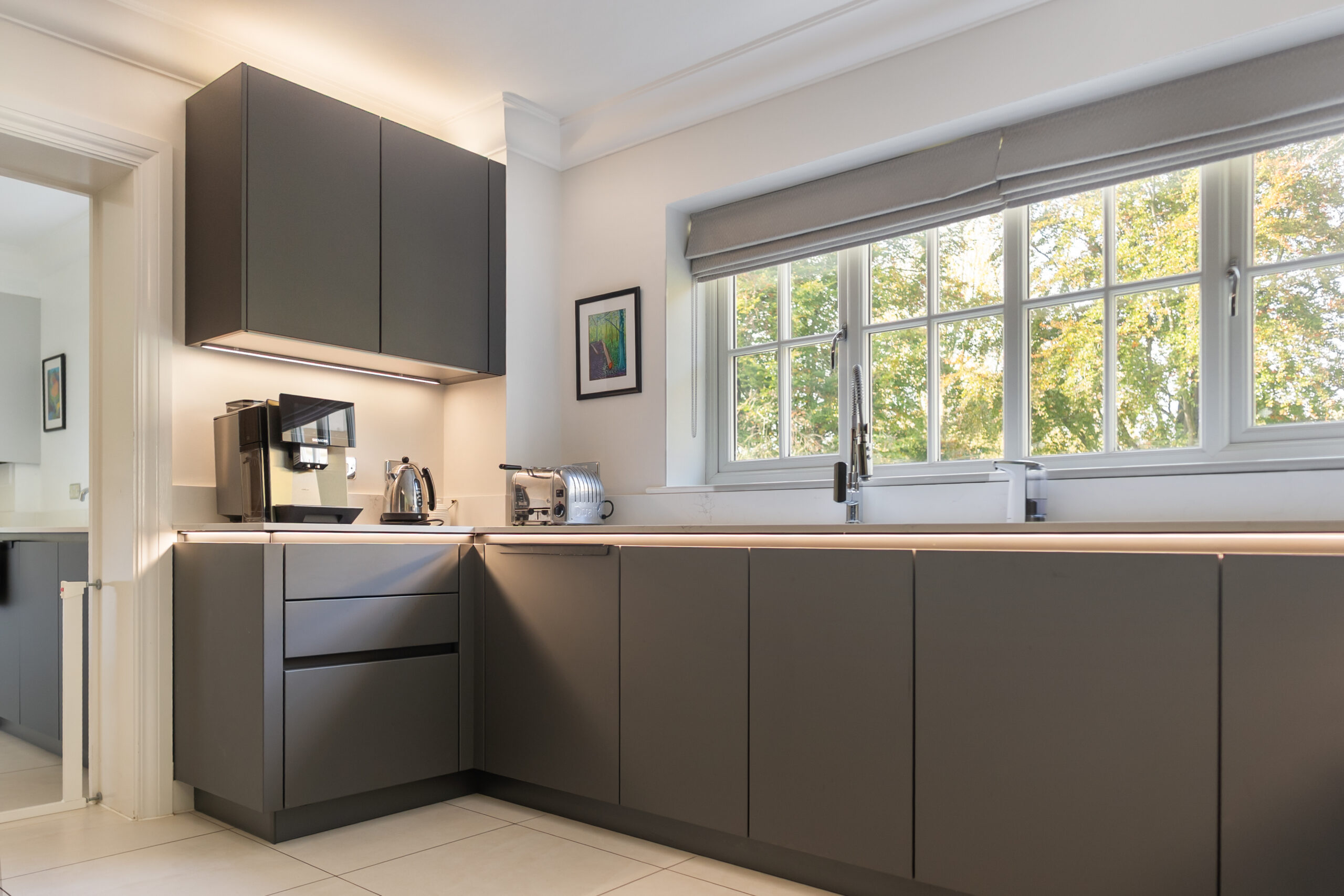
The pros are easy. It looks sleek, it’s safer in a busy family kitchen with no handles at hip height, and long runs and islands look tidier. It also works well in open-plan spaces where the kitchen is on show from the sofa.
The cons are real too. Matt and gloss fronts show fingerprints more without a handle to grab, so a fingerprint-resistant finish is worth it. Channels need a wipe now and then. And cheap handleless kitchens are where poor build quality shows fastest, because there’s nothing to hide misaligned doors.
“Handleless is unforgiving. If the doors aren’t dead level, the rail shows it straight away. That’s where the cabinet quality and the fitting really count.”
03. What Makes a Good Handleless Kitchen
Start with the box. Every kitchen we fit is made in Germany by Schüller, and a rigid 19mm carcass and soft-close as standard keep doors aligned for years, which matters more here than anywhere. Our premium vs standard kitchens guide explains why.
Then think about finish and colour. Ranges like SmartGlas, Elba and Matera all suit a handleless build. Matching the rail colour to the doors gives the cleanest look, while a contrasting rail adds a graphic line. Add plinth or under-cabinet LEDs from our lighting options and a slim quartz worktop, and the whole run feels lighter. Torn between styles? Read modern vs traditional kitchens.
04. Handleless Kitchens We’ve Fitted Near You
We’ve fitted handleless kitchens all over the area. See this white matt Fino Glasline kitchen, a crystal grey gloss Fino and a magnolia gloss Gala, or browse all our projects.
Better still, run your hand along a real rail at our Linford Wood showroom. We design and fit across Milton Keynes, Bedford and Northampton, and you can read what customers say in our reviews.
05. Frequently Asked Questions
What is the difference between true handleless and J-pull?
True handleless uses a separate recessed rail along the cabinet, so the doors are completely flat. J-pull shapes the grip into the top edge of each door. True handleless gives the cleaner, more architectural look.
Are handleless kitchens practical for families?
Yes. With no handles sticking out, there’s nothing for kids to bump into or clothes to snag on. Choose a fingerprint-resistant finish and the fronts stay easy to keep clean.
Can a handleless kitchen look traditional?
It can lean warmer with wood-effect or painted-look fronts, but handleless is a modern look at heart. If you love a Shaker style, we’ll show you both at our free design consultation.
Thinking About a Handleless Kitchen?
Free in-home design visit. No pressure, no obligation.
Book Your Free Visit →SEO & blogs by signal