
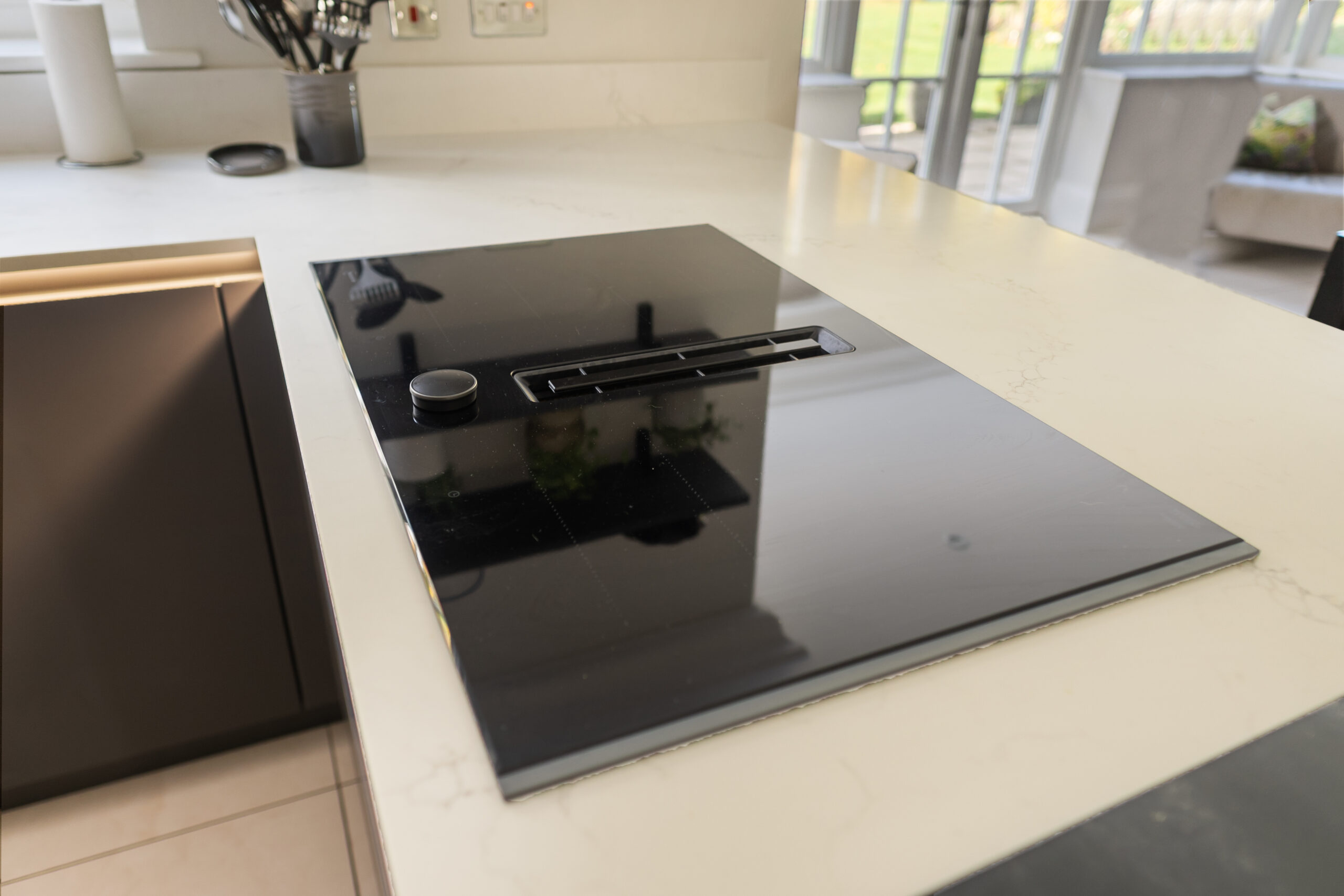
A big cooker hood can ruin the view across an open-plan kitchen. That’s why so many people now ask us about a venting hob, a hob with the extractor built right into the cooktop. No hood, no chimney, just a clear line of sight from the island to the garden.
At KitchenSMART we plan venting hobs into new Schüller kitchens all the time. Here’s how they work, the honest trade-offs, and what to sort out at the design stage. You’ll find the brands we supply on our appliances page.
01. What Is a Venting Hob and How Does It Work?
A venting hob, also called a vented hob or cooktop extractor, pulls steam, smells and grease down into a vent in the hob itself, instead of letting it rise to a hood. A fan sits in the cabinet below and moves the air away.
Bora, founded in Bavaria in 2007, built its name on this idea, and Neff and Siemens now make their own versions. We cover how those brands compare in our guide to German appliance brands.
02. Ducted or Recirculating Venting Hob?

Every venting hob works in one of two ways. Ducted (exhaust air) sends the air outside through a duct and wall sleeve. It’s the most effective option and the easiest to plan in a new build or extension, where the duct route can go in before the floor and walls are finished.
Recirculating cleans the air through a grease filter and a charcoal odour filter, then returns it to the room. It’s simpler to fit, but moisture stays in the kitchen, so good ventilation matters. Bora’s own guide says its odour filters need replacing after about 150 hours of use, or roughly once a year.
“Decide on the venting hob before the plan is drawn. The duct route and the drawers under the hob shape the whole island.”
03. Venting Hob Pros and Cons
The pros: no hood blocking the view, extraction right at the pan, and a clean look on an island or under a sloped ceiling. It also frees up the wall above the hob for shelving or a window.
The cons: the fan and ducting take up space in the cabinet below, so drawers need planning around them. Very tall stockpots can let some steam rise past the vent. Recirculating models need filter changes. And a venting hob usually costs more than a standard hob plus hood, so weigh it against your budget using our Schüller kitchen cost guide.
One safety point: a ducted extractor in the same room as an open-flued gas boiler or fireplace needs the right setup, such as a window contact switch. We check this at the survey.
04. Planning a Venting Hob Into Your Kitchen
Our kitchen planning service works out the duct route, plinth space and drawer layout first, then our own installation team fits it. Pair it with a handleless kitchen and a solid quartz worktop for the cleanest look. Renovating? Our new build and renovation guide covers the planning side.
Browse real installs in our projects, like this Matera lava black kitchen, or see appliances in person at our Linford Wood showroom. We fit across Milton Keynes, Bedford and Northampton, and our reviews show how it goes.
05. Frequently Asked Questions
Does a venting hob work as well as a cooker hood?
For everyday cooking a good one does the job well, because it catches steam right at the pan before it spreads. Very tall pans are the weak spot. We’ll talk through how you cook before recommending one.
Can you put a venting hob on a kitchen island?
Yes, and it’s where they make the most sense, with no ceiling hood blocking the room. The duct route needs planning early, which we do at your free home visit.
How often do venting hob filters need changing?
Grease filters are cleaned regularly. On recirculating models the charcoal odour filter is replaced periodically, which Bora puts at about 150 hours of use or around a year, depending on how much you cook.
Want a Venting Hob in Your New Kitchen?
Free in-home design visit. No pressure, no obligation.
Book Your Free Visit →SEO & blogs by signal